


Is vaccine really accessible to all ?
- Nayi Umang
- Jun 15, 2021
- 3 min read

India has recently experienced a devastating second wave of the COVID-19 pandemic.
In a new opinion piece, two scientists clarify the failures of vaccine planning and deployment that have contributed to this second wave.
Is vaccination easily available and accessible to the citizen of our country?
The most clear-cut answer is NO.
India has authorized three COVID-19 vaccines:
•Covaxin, developed by Bharat Biotech
•Covishield, developed by Oxford/AstraZeneca
•Sputnik V, developed by the Gamaleya Research Institute of Epidemiology and Microbiology, Russia.
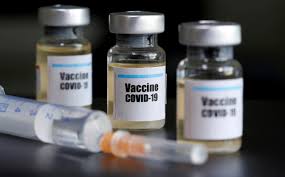
Despite this, insufficient production of the vaccines and inadequate planning means the country has a significant shortfall of vaccines. Currently, only around 12.5% of the Indian population has been fully vaccinated by June 2 and the rest of the population are yet to get the jab but How?
India has a population of 1.3 billion people. However, before May, manufacturers were producing only around 10 million doses of Covaxin and 70 million doses of Covishield per month.
Over 414,000 daily cases
India has recently seen a devastating second wave of the COVID-19 pandemic, with a record high of over 414,000 daily cases on May 6, 2021. Although this figure has since declined, officials are still currently recording over 132,000 cases of COVID-19 every day but the risk of variants resistant to a person’s immunity is ever-present and what's even worse? vaccine stocks in the country have nearly dried up, and no-one is sure when more will arrive.
The national government should not rely on digital technologies to record who has received their vaccinations. They highlight that 35% of people, typically in rural areas, do not have reliable internet access, creating a digital divide instead implementing physical vaccine cards would be more equitable.
Unsurprisingly, the upper the rich, the upper class people are more likely to own Internet-enabled smartphones and money, to get the vaccine before the availability date ( as we all have seen some politicians family member getting their doses ) while the rest lower, underprivileged class, rural population stand at a risk of exclusion from accessing vaccines.
Only 1 in every 3 were found to be using smartphones (approximately 90% of the smartphone users had Internet in their phones), and merely 16% and 10% households had access to a computer/laptop and an Internet connection at home, respectively. Even though 18-44-year-olds were more likely to own smartphones (nearly half), the proportion is still dismal, with the majority of the chunk likely to get the jab later than their privileged counterparts But CoWin, as the platform is known, couldn't handle the number of people who tried to book the slots.
"I am stuck in an OTP loop of horrors," said one 33-year-old while trying to register for her jab. OTPs, or one-time passwords sent to mobile numbers, are a favoured Indian way of verifying identity online. She had a string of messages with OTPs, but nowhere to put them.
Others didn't even get that far - #WaitingForOTP was soon trending on Twitter, and the memes and jokes followed. Eventually the site was back up - but, to the disappointment of more than 13 million people who did finally register, not a single vaccine centre had slots for booking.
In 2017, 24% Indians (and 35% among 18-44s) owned smartphones. Going by our most recent data of late 2020 and early 2021, in the five states that went to polls most recently — Bihar, Assam, West Bengal, Tamil Nadu, and side of the digital divide. 158 million people have received the first doses as of May 4, in a country of about 1.4 billion people i.e 11.5% of India's population.
The federal government still needs another millions doses to finish vaccinating everyone above the age of 45 - about 440 million people. State governments are expected to pick up the tab for 18-44 year olds - there are 622 million of them and they would need more than 1.2 billion doses. Even vaccinating 70% - to achieve herd immunity - would require some 870 million doses. This does not account for wastage, which means more stocks are needed.
To be able to administer all of these doses in the next year, India needs to be giving 3.5 million doses a day - it's behind by more than a million doses right now.
A sizeable population struggles to get a shot at the life-saving vaccine — some in the absence of an Internet-enabled smartphone, some due to ignorance of the registration process, some for not knowing the only language (English) the portal is available in, and the rest, in navigating through the complex multi-step journey on the portal for freezing a slot despite having the means.

The above data is taken from Lokokti CSDS Survey 2019.


Comments